FINDING SOMEONE YOU TRUST
How to choose the right spine surgeon for you in Orange County.
There is an uncertainty that often comes with back, neck, or nerve pain.
You may have seen a primary care physician. You may have had an MRI. You may have been told that the scan shows a disc problem, arthritis, stenosis, or a pinched nerve. You may also have left those appointments with the same question you had when you walked in: What does this actually mean for me?

For many people in Orange County and Long Beach, finding a spine specialist begins at that point, and surgery comes into question. Not because they are ready for an operation, necessarily, but because they are ready for a clearer explanation.
Choosing a surgeon can feel difficult. Most practice websites make similar promises. They mention technology, advanced training, minimally invasive procedures, and excellent outcomes. Those things matter. But they do not always tell you what it will feel like to be cared for by that physician, or whether you will leave the appointment with a plan you understand.
The right spine surgeon should help you make sense of your condition before asking you to make a decision.
There are two main considerations to choosing the right care team for your back and neck conditions:
01 | Will this surgeon provide comprehensive care and advice?
A spine surgeon is not only someone who performs surgery. A good consultation begins with diagnosis, context, and judgment.
Back and neck pain can come from many sources. A disc herniation, arthritis, spinal stenosis, scoliosis, muscle strain, instability, or nerve compression may produce overlapping symptoms. Imaging is important, but an MRI alone cannot determine the right treatment. Your symptoms, physical examination, medical history, lifestyle, goals, and the way your condition has changed over time all matter.
The question is rarely just, “What does the scan show?”
More often, it is:
Does this finding explain my symptoms?
Is it likely to improve without surgery?
What happens if I wait?
What treatment options are reasonable for my life?
What would surgery realistically change?
That is the conversation worth looking for.
02 | Do I feel clarity about my treatment plan?
Medicine is not always neat. A responsible physician should be able to explain what is known, what remains uncertain, and what the next step is.
Be cautious of anyone who makes treatment sound automatic. Some spine conditions do require timely surgery, especially when there is progressive weakness, spinal cord compression, or severe nerve compromise. But many conditions can first be managed with observation, physical therapy, medications, injections, activity modification, or a coordinated plan involving other specialists.
A thoughtful surgeon should be comfortable telling you when surgery is not the right next step. That does not mean your pain is being dismissed. It means the recommendation is being made with your long-term outcome in mind.
Questions Worth Asking at Your First Appointment
You do not need a medical background to have a useful consultation. A few direct questions can reveal a great deal about how a practice thinks.
Consider asking:
What do you believe is causing my symptoms?
Does my imaging match what I am experiencing?
What are my non-surgical options?
What would make surgery appropriate in my case?
What are the risks of waiting or continuing conservative treatment?
What should I reasonably expect from recovery?
Are there parts of my health, activity level, or daily life that could affect my outcome?
The goal is not to interrogate your physician. It is to make sure you understand the recommendation well enough to participate in it.
Experience Matters. So Does Perspective.
Technical expertise matters in spine surgery. So does the ability to recognize when a situation is more complex than it first appears.
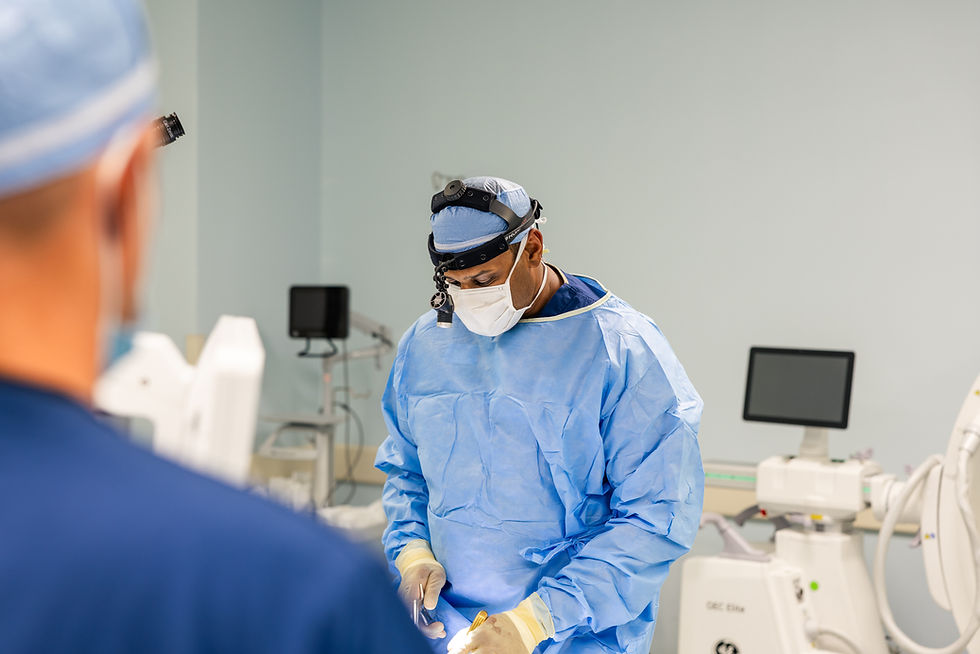
Dr. Nikolas Baksh completed fellowship training in both spine surgery and orthopedic oncology. That background informs his approach to difficult cases involving spinal tumors, revision surgery, deformity, degenerative disease, and conditions where the right answer is not immediately obvious.
But expertise should not make a physician harder to talk to.
At Nikolas Baksh, MD, the aim is to make specialized care feel clear and accessible. Patients should feel comfortable asking questions, requesting clarification, and taking time to understand their options. The practice was built around the belief that a recommendation carries more weight when a patient understands the reasoning behind it.
A Second Opinion Can Be a Useful Part of the Process
Seeking a second opinion does not mean you distrust your current physician. It can simply mean you are facing a meaningful decision and want to understand it from another perspective.
This is particularly valuable when:
You have been advised to undergo spine surgery and still have questions
Your symptoms have persisted despite treatment
You have received conflicting recommendations
You have had previous spine surgery and continue to experience pain or limitations
You are considering a complex procedure, such as fusion, revision surgery, or deformity correction
The best second opinions do not begin by assuming another clinician was wrong. They begin by reviewing the full picture carefully.
The Right Next Step Should Feel Understandable
Choosing a spine surgeon in Orange County is ultimately about more than finding the nearest office or the most impressive website. It is about finding someone who can look closely, explain clearly, and guide you without rushing you toward a predetermined answer.
You should leave a consultation with more than a diagnosis. You should leave with a clearer understanding of what is happening, what your options are, and what path forward makes sense for you.
Considering a consultation? Dr. Baksh provides individualized spine care for patients throughout Orange County, Long Beach, and surrounding Southern California communities.

Comments